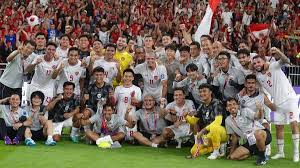
As the 2026 FIFA World Cup draws closer, Indonesia’s national football team is gearing up for an intense campaign in the Asian qualifiers. With the World Cup expanding to 48 teams, the stakes are higher than ever for nations aiming to secure their place in the prestigious tournament. Indonesia, traditionally a competitive force in Southeast Asian football, faces a tough road ahead in their bid for a spot in the global football showcase.
The Road to 2026: More Teams, More Competition
For the first time in history, the 2026 World Cup will feature 48 teams, offering a greater opportunity for Asian nations to secure a place. However, with more teams vying for a ticket, the competition in the Asian qualifiers has only intensified. Indonesia is placed in a highly competitive group, featuring not only regional powerhouses like Japan, South Korea, and Australia but also emerging teams that have been steadily improving in recent years.
Indonesia’s national team, known as Garuda, has shown promise in recent years, particularly in regional tournaments such as the AFF Cup and the Asian Cup. Under the guidance of head coach Shin Tae-yong, who was appointed in late 2020, the team has made strides in terms of discipline and organization. However, they will need to raise their level significantly to compete with some of Asia’s best.
Key Players to Watch
One of the biggest challenges for Indonesia. Will be to consistently field a strong team capable of competing with the likes of Japan, South Korea. And Australia. The team boasts several key players who will be crucial to their success in the qualifiers:
- Egy Maulana Vikri: Widely regarded as one of Indonesia’s brightest talents, Vikri’s technical ability and flair in attack will be essential for the team’s offensive play. His experience in European football will be vital in high-pressure matches.
- Stefano Lilipaly: The veteran midfielder brings creativity and experience to the team, having been an important figure in the national team for several years. Lilipaly’s ability to control the tempo and create scoring opportunities will be a valuable asset.
- Rizky Ridho: As one of the rising stars of Indonesian football, Ridho has impressed with his defensive solidity and leadership at the back. His role as a central defender will be crucial, especially when facing some of the continent’s most potent attackers.
The Challenge of Competing with Regional Heavyweights
Indonesia’s toughest challenge will undoubtedly come from the top-tier teams in Asia. Japan and South Korea have long been dominant forces in the region, consistently qualifying for the World Cup. Australia, having moved to the Asian Football Confederation (AFC) after leaving the Oceania Football Confederation. Has become a serious contender in the qualifiers as well. These teams boast a mix of experience, world-class talent. And strong domestic leagues that have been producing top players for years.
Indonesia’s historical World Cup qualification campaigns have fallen short, but the 2026 edition provides a glimmer of hope due to the increased number of spots available for Asian teams. To stand a chance, Indonesia must perform well in their group stage, earning crucial points against both regional and lesser-ranked teams.
Coach Shin Tae-yong’s Vision
Under Shin Tae-yong, Indonesia has undergone a tactical transformation. Known for his structured and disciplined approach to football, Shin has prioritized a solid. Defensive setup while encouraging quick, counter-attacking football. His experience coaching South Korea in the 2018 World Cup gives him valuable insight into. What it takes to compete at the highest level.
Shin’s long-term vision for Indonesian football extends beyond the 2026 qualifiers. He is focused on developing young players and building a sustainable football culture in the country. Aiming to elevate Indonesia’s national team to the same level as other top teams in Asia.
Roadblocks and Expectations
Despite the optimism surrounding the team’s potential, Indonesia will face several hurdles on the road to the 2026 World Cup. Injuries to key players, lack of consistency in qualifying matches. And the pressure of facing top-tier teams could derail their campaign. Additionally, the support from local football fans will play an important role. As the passionate Indonesian supporters are known for their unwavering loyalty, which could give the team the morale boost it needs.
The Indonesian Football Association (PSSI) has committed to providing resources and support to the team, but there remains an ongoing need for investment in infrastructure and youth development programs. The hope is that a strong World Cup campaign will ignite further investment in the sport.
Conclusion: A Steep Climb Ahead
The journey to the 2026 World Cup will be a tough challenge for Indonesia’s national football team, Indonesia’s National Football Team but with a strong squad, tactical discipline, and the leadership of Shin Tae-yong, there is hope that the Garuda can make a strong push for a historic qualification. While the road ahead is filled with formidable obstacles, the expansion of the World Cup and the rising standard of Indonesian football provide a sense of optimism that the team may one day see their World Cup dream come true.